
 TR
TR EN
EN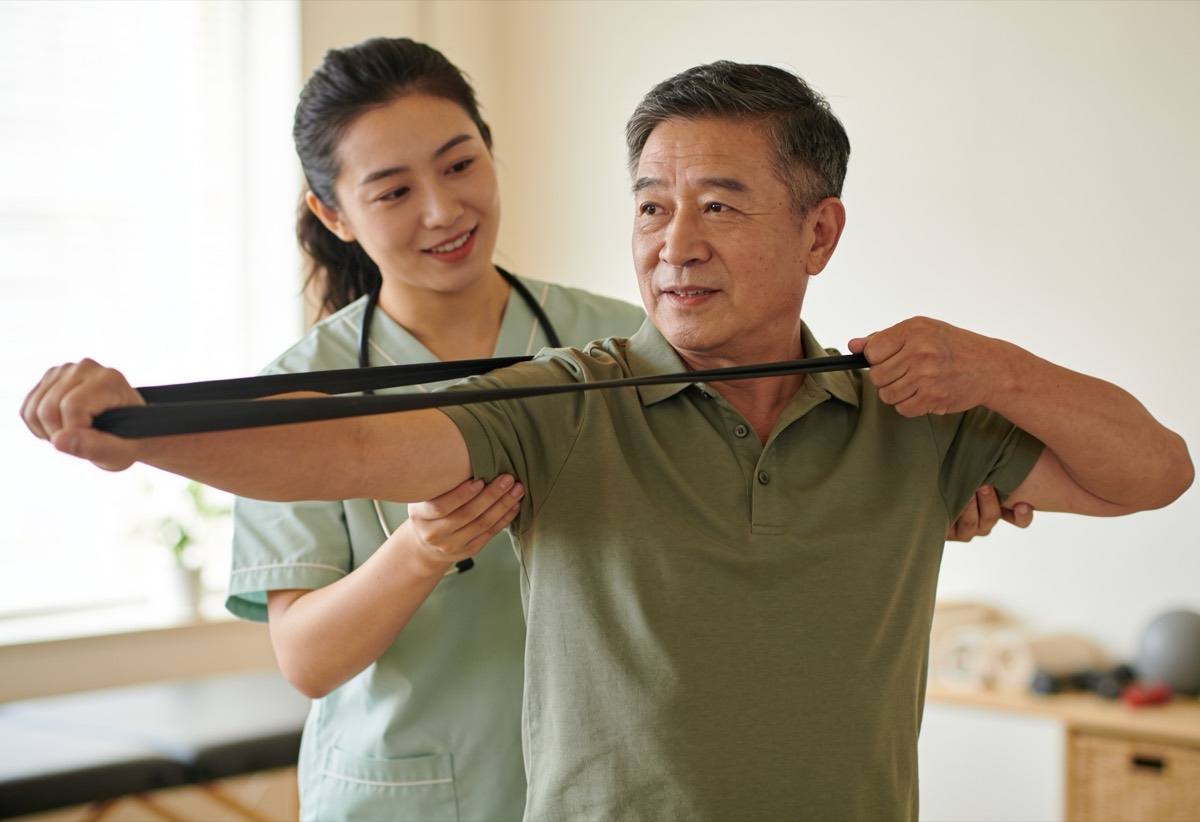
Overview
Also known as "tennis elbow", lateral epicondylitis is the most common overuse syndrome of the elbow. It is a tendinopathy injury affecting the extensor muscles of the forearm. The tendons of these muscles attach to the region called the lateral epicondyle of the humerus bone, which extends between the shoulder and the elbow. It is a condition that progresses with severe pain on the outer side of the elbow following injury to the relevant tendons due to overuse and repetitive use of these muscles. It often arises with continuously repetitive movements such as computer use, heavy lifting, movements that require us to frequently turn our forearm inward and outward, and repetitive vibration. Despite its name, it is also frequently encountered in other sports in which we frequently use repetitive movements, such as squash, badminton, baseball, and swimming. In addition, this condition is also frequently seen in people whose jobs involve repetitive one-sided movements, such as electricians, carpenters, gardeners, and desk workers.
Symptoms
In tennis elbow, pain can radiate from the outside of the elbow to the forearm and wrist. When there is pain, situations such as difficulty gripping with the hand and difficulty turning a doorknob can occur.
At first there can be pain and burning that begins on the outside of the forearm and elbow. Over time the pain worsens further. If you continue the activity that causes your condition, the pain can spread even to your wrist at rest.
When you place your arm and hand on the table with the palm facing down and try to raise your hand against resistance, there can be pain in the elbow.
Diagnosis
- Tennis elbow can usually be diagnosed with a physical examination. In some complex cases, a few tests can be performed to make a differential diagnosis.
- An X-ray showing the elbow bones may be taken to see whether there is arthritis in your elbow
- Magnetic resonance imaging (MRI) can show the tendons and the severity of the damage.
- With elbow electromyography (EMG), it can be checked whether there is any nerve problem that could be causing the pain.
Treatment
- For treatment, it is very important first to avoid the movement that causes the pain. The things to do afterwards are;
- Rest and stopping the activity that causes the symptoms
- Ice application in inflammatory conditions
- Strengthening and stretching exercises
- Anti-inflammatory medications prescribed by the doctor
- If these measures do not work —
- Special bandages and splints can be used to keep the area stable and supported for a few weeks.
- With physical therapy, special exercises are used to strengthen the forearm muscles, and ice massage or various muscle-stimulating techniques are used for muscle recovery.
- Surgery is a method resorted to very rarely.
What We Do
First, our patient who comes to us with elbow pain is assessed in the doctor's examination. As a result of the necessary tests and differential diagnosis criteria, the doctor's diagnosis is made.
Afterwards, the treatment methods prescribed by the doctor begin to be applied.
When needed, the doctor provides muscle relaxation in that area with dry needling.
In general, with our manual therapy approach, mobilizations begin to be applied to provide muscle relaxation.
After relaxation is achieved in the tendons and muscle, strengthening is provided with exercises specialized for lateral epicondylitis.
After the applications, kinesio taping (athletic taping) is applied, which does not hinder daily life but at the same time supports the muscles and tendons, so that the treatment is spread across the whole day.
When needed, our doctor continues to support the process with mesotherapy, PRP, and trigger point injections.
Our aim is to complete this process in a pain-free manner.