
 TR
TR EN
EN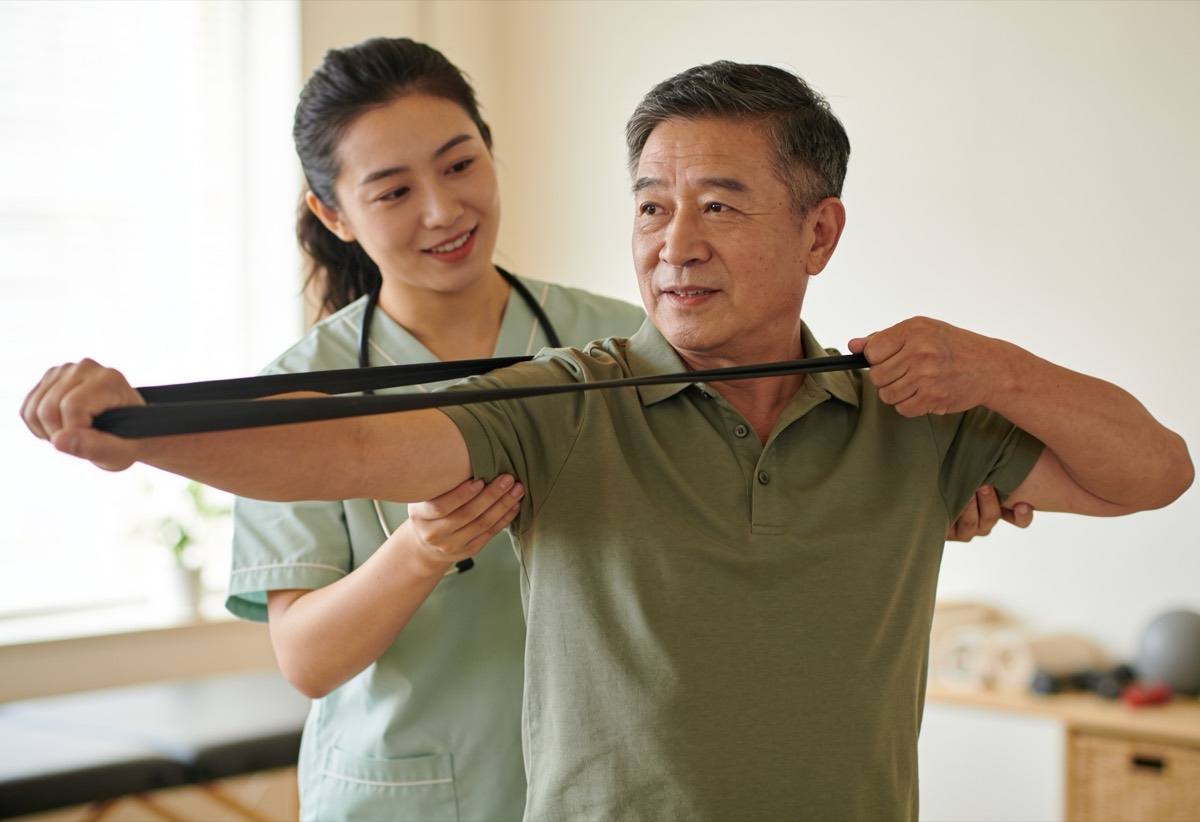
Overview
Scoliosis is a postural disorder that arises when the line of the spine, which should be straight when viewed from front to back, curves sideways and, most often, simultaneously rotates on its own axis. The spine changes shape not in a single plane, but in three dimensions: front-back, sideways, and rotation. For this reason, it is not sufficient to assess scoliosis by looking only at an image taken from the front.
Three-dimensional (3D) scoliosis physiotherapy is an approach that addresses this curvature and rotation in the spine in all three planes at once, relying not on devices but on the person's own movement and breathing. The aim is to slow the progression of the curvature, balance the existing posture, and improve the person's symmetry in daily life.
Causes
- Idiopathic scoliosis — in the vast majority of cases, no clear cause is found; it is most commonly seen in children and adolescents during the growth period.
- Structural causes — congenital vertebral deformities (congenital scoliosis) can affect the development of the spine.
- Neuromuscular causes — some muscle and nervous-system diseases can disrupt the muscle balance around the spine and lead to curvature.
- Posture and habits — factors such as prolonged one-sided work and carrying heavy, one-sided loads can make non-structural curvatures more pronounced.
- Muscle imbalance — the muscles on one side of the spine being tight and those on the other side being weak is an important factor that feeds the curvature.
Symptoms
- The shoulders, shoulder blades, or hips being at different heights on the two sides
- A prominence that becomes pronounced on one side of the back when bending forward
- Fatigue and pain in the low back and back that increase over time
- Clothes shifting to one side, visible asymmetry in posture
- A feeling of reduced breathing capacity in advanced cases
Treatment
The aim in scoliosis treatment is not to give everyone the same program, but to draw up a personalized plan according to the type, direction, and degree of the curvature. In many mild and moderate cases, with a suitable exercise program the progression of the curvature can be slowed and the posture can be balanced. We always regard surgery as a last resort.
At this point, the three-dimensional exercise approach comes to the fore. The human body is three-dimensional; for this reason, instead of standard, one-size-fits-all exercises, exercises planned according to the person's curvature pattern, combining breathing and strengthening, are applied. With correct breathing, the collapsed side of the curvature is opened, while the weak muscles are strengthened and the tight muscles are released.
What We Do
First, our physician performs a detailed physical examination; assessing the direction, degree, and rotation of the curvature, they draw up a personalized treatment protocol. A holistic assessment together with the examination, not imaging alone, is essential.
By applying mobilization, clinical massage, and, in suitable cases, manual therapy to tight muscle groups, we reduce the imbalance around the spine. Once the muscles have relaxed, we move on to the main work, namely three-dimensional and fully personalized exercises. Based on the APPI method, we combine breathing and strengthening exercises and aim to establish, step by step, the correct posture that balances the curvature.
We finish sessions with kinesiology taping to help spread the achieved posture throughout the day. With the principle 'there is no disease, there is a patient', we follow each client according to their own curvature pattern and continue to monitor the process remotely as well.