
 TR
TR EN
EN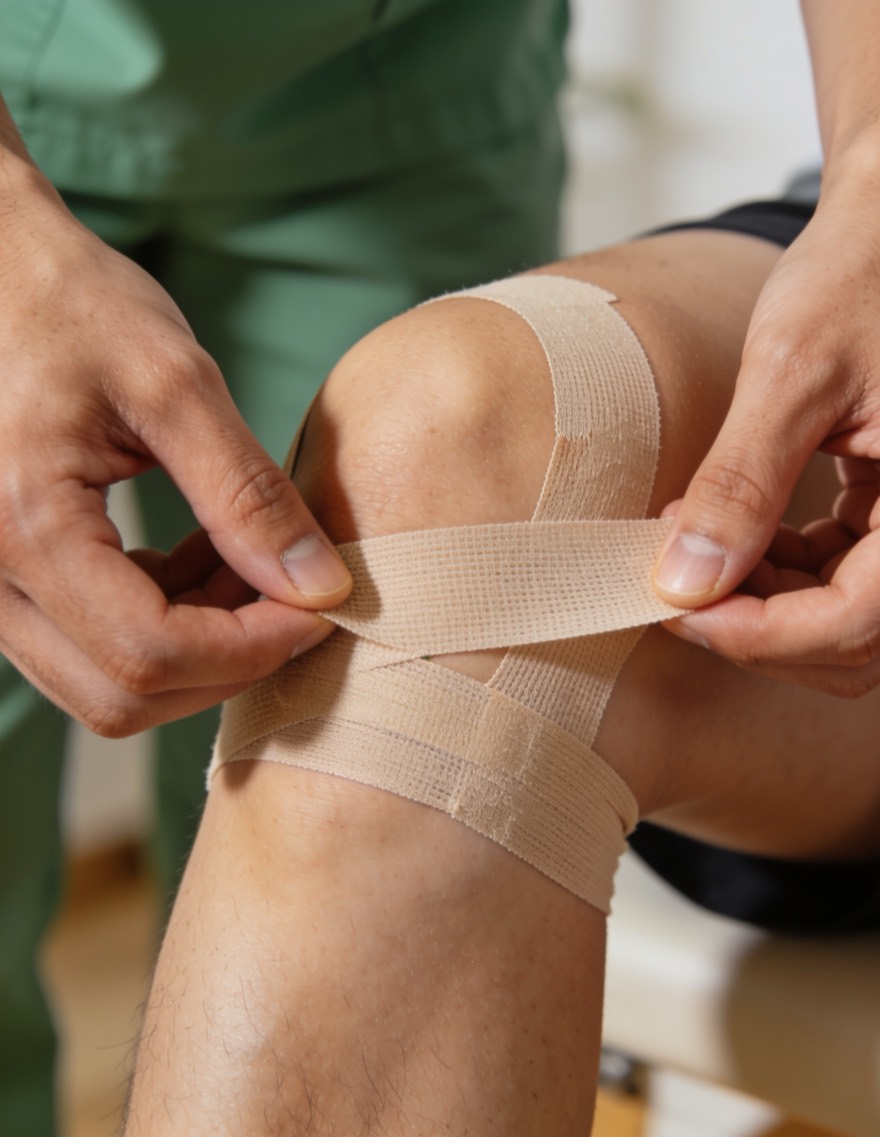
Overview
A lumbar herniated disc is a condition that occurs when the discs between the vertebrae in the lower back, which act as shock absorbers and consist of a gel-like interior surrounded by outer connective tissue, slip or tear toward the spinal canal.
The lower back is a structure made up of five vertebrae, from L1 down to L5, together with their discs. The lumbar region of the spine is the area that bears most of the body's weight. For this reason, a lumbar herniated disc is one of the most commonly encountered conditions today. It can often progress without any symptoms. It is a condition that is noticed when pain increases as the slipped or torn disc presses on the nerves passing through the spinal canal.
Causes
Age: with aging, the loss of fluid in the discs, together with wear and tear, makes the discs more prone to tearing. This shows that the age factor increases the likelihood of a herniated disc.
Weight: excess body weight causes extra stress on the discs in the lower back.
Heavy lifting. Lifting heavy loads in improper positions is one of the common causes leading to a herniated disc.
Occupation. People who work in physically demanding jobs have a higher risk of back and lower back problems. Repetitive and frequent lifting, pulling, pushing, and sideways bending movements increase the risk of a herniated disc.
Smoking — some studies suggest that smoking reduces the oxygen supply to the discs and that the discs tear more easily.
Muscle weakness — the most fundamental problem is weakness of the lower back muscle group. Because the back muscles are weak, the load on the vertebrae increases, and this causes the discs to become compressed and to tear.
Symptoms
A lumbar herniated disc generally shows itself with pain that radiates to the hips, legs, and feet. In general, its symptoms are as follows:
Lower back pain — is not on its own a sign of a herniated disc. There can also be mechanical muscular pain in the lower back. For this reason, several symptoms should be evaluated together.
Pain in the hips, legs, and feet — a herniated disc generally causes radiating pain. This is because the nerve on which the herniation presses as it enters the spinal canal causes radiating pain in the areas where it extends into the hip, leg, and foot.
Tingling and numbness in the legs or feet
Muscle weakness — the muscles to which the affected nerve carries signals tend to weaken.
Difficulty with lower back movements — because the herniation is strained during certain movements, there may be severe and radiating pain with these movements.
Pain when sitting down and standing up — because the load on the spine increases greatly when standing up from a seated position, people with a herniated disc may experience difficulty and severe pain.
Foot dragging — in advanced stages of a herniated disc, weakness may cause an inability to lift the leg, resulting in foot dragging.
Urinary incontinence — is one of the most advanced-stage symptoms of a herniated disc.
Diagnosis
Physical examination plays an important role in diagnosing a herniated disc. During the physical examination, the doctor takes the patient's history and checks muscle strength, the localization and distribution of pain, and muscle reflexes.
After the physical examination, the herniated disc can be seen clearly with imaging methods such as MRI and CT.
Often, even though a herniation is seen on imaging, the patient's complaints do not stem from the herniation. For this reason, MRI and CT findings alone are not sufficient. At this point, the physical examination is very important. If the patient's physical tests raise suspicion of a herniated disc and a herniation is seen on MRI or CT images, a diagnosis of herniated disc is made.
Treatment
Recent studies show that more than 90% of herniated disc cases can be treated without the need for surgery. These treatment methods are as follows;
Rest helps to reduce the pain caused by a herniated disc.
MEDICATIONS: painkillers, neuropathic medications, muscle relaxants, and cortisone injections help reduce pain complaints.
Physical therapy has a significant place in the treatment of a herniated disc. Medications relieve pain, but because the problem continues there, treatment aimed at the problem is needed. The heat agents applied in physical therapy are effective in reducing pain. Afterwards, appropriate exercise programs aim to strengthen the muscles of the lower back and trunk.
Chiropractic treatment: studies have shown that spinal manipulation is effective for lower back pain. Sudden thrusts applied to the lower back with special techniques and positioning help reduce complaints by relieving the nerve under pressure.
Acupuncture and dry needling: some studies show that dry needling relieves chronic back and lower back pain.
Kinesiological taping: taping done with the correct technique to reduce the load on the spine and support the muscles acts like a brace and helps reduce pain complaints.
What We Do
For our patient diagnosed with a herniated disc by our doctor, our doctor first performs injections and dry needling as needed to reduce the pain. Afterwards, an appropriate treatment protocol is drawn up and the patient is referred to our physiotherapist.
With our expert physiotherapist, for patients who need it and whom our doctor deems suitable, we apply chiropractic treatment to the spine, including the lower back, neck, and upper back.
After pain reduction and spinal alignment are achieved with chiropractic treatment, we use mobilization techniques to relax the tense muscles in the lower back and relieve the spine.
After relaxation is achieved with mobilization techniques, we apply appropriate exercise programs to strengthen the muscles surrounding the lower back, which is the underlying problem. Here we take care that the exercises are entirely individualized and three-dimensional. Because, based on the saying that there is no disease, only the patient, we are aware that exercises must be entirely personalized, and we apply personalized exercise programs.
After achieving muscle strengthening, we send our patient off with full satisfaction and continue to follow up remotely.