
 TR
TR EN
EN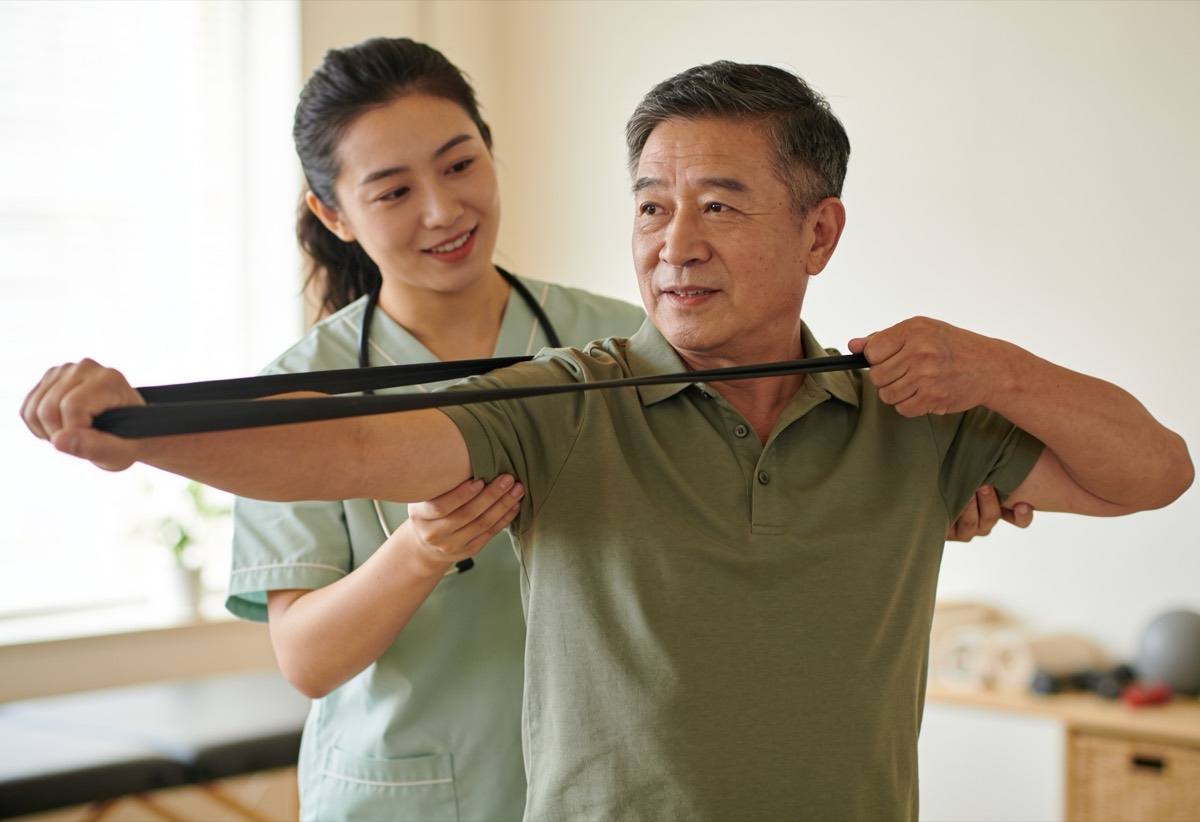
Overview
Orthopedic rehabilitation is a holistic physiotherapy process aimed at reducing pain, restoring range of motion, and helping the person return to daily life as fully as possible during the period following an injury, disease, or surgery affecting the musculoskeletal system, that is, the bones, joints, muscles, tendons, and ligaments.
This process is not limited to a single application. It is a roadmap in which different methods, from manual therapy to exercise, from electrotherapy to taping, are brought together according to the person's needs. Our principle is always the same: there is no disease, there is a patient. For this reason, we design each program on a personalized basis.
Causes
The main conditions requiring orthopedic rehabilitation are:
- Sports injuries — muscle tears, ligament strains, and tendon injuries.
- Post-fracture and dislocation period — restricted movement and muscle wasting following a cast or surgery.
- After joint surgery — recovering function following procedures such as joint replacement or arthroscopy.
- Degenerative disorders — joint wear such as osteoarthritis.
- Overuse syndromes — conditions such as tendinitis and bursitis related to repetitive movements.
- Posture disorders — muscle imbalances caused by prolonged incorrect positions.
Symptoms
Common signs indicating a need for rehabilitation:
- Pain that increases with movement or persists even at rest
- Restriction and stiffness in the joint's normal range
- Weakness and wasting in the muscles around the injured area
- Swelling, tenderness, and an occasional clicking or catching sensation
- Difficulty with daily movements such as walking, climbing stairs, and gripping
- Instability and avoidance of using that area
Diagnosis
A correct rehabilitation program begins with a correct assessment. Our physician first takes a detailed history and examines the location of the pain, muscle strength, joint range of motion, and functional limitations with a thorough physical examination.
Imaging methods such as X-ray, MRI, and CT complete the picture. However, we always emphasize this: imaging alone is not sufficient; the essential thing is the physical examination. A finding on an image may not always match the patient's complaint. For this reason, we plan treatment according to the person themselves, not the image.
Treatment
In orthopedic rehabilitation, our priority is non-surgical (conservative) methods; we regard surgery as a last resort. The core components of the process are:
- Manual therapy — restoring range of motion with mobilization and soft-tissue techniques.
- Therapeutic exercise — personalized stretching, strengthening, and balance work.
- Physical therapy agents — hot-cold applications to reduce pain and edema.
- Kinesiology taping — support for muscles and joints that need it.
What We Do
First, our physician establishes the diagnosis with a detailed examination and draws up a personalized treatment protocol. When deemed necessary, dry needling and injections are applied to painful, tight trigger points; in suitable cases, we support healing with ozone therapy.
Our expert physiotherapists release tight muscles with mobilization, cupping therapy, Graston, and clinical massage; in cases that require it, we perform chiropractic applications for the spine. Once relief is achieved, we move on to the phase that brings the real healing: fully personalized, three-dimensional exercise. The human body is three-dimensional; therefore, we apply personalized rather than standard exercises.
We finish sessions with kinesiology taping so that treatment extends throughout the day. Throughout the process we do not leave our client alone, and we continue to follow up remotely even after healing is complete.