
 TR
TR EN
EN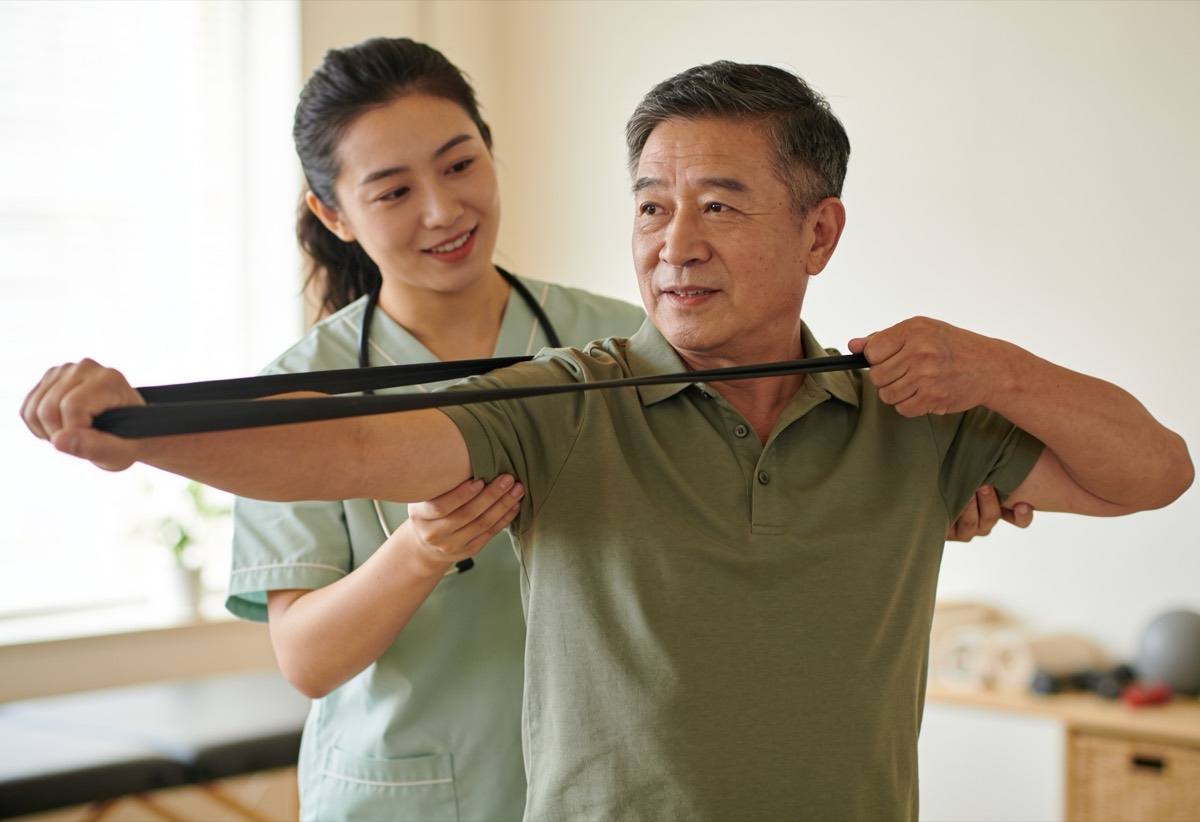
Overview
Our shoulder joint owes its wide range of motion to a structure called the rotator cuff, made up of four small muscles and tendons. These tendons keep the head of the arm bone balanced in its socket and enable the lifting and rotating movements of the shoulder.
Shoulder tears mostly occur through partial or complete damage to these rotator cuff tendons. A tear can develop as a result of a sudden strain, or it can form through wear of the tendon over the years. The size and location of the tear determine the treatment approach.
Causes
- Age-related wear — the tendon tissue thins over the years and becomes prone to tearing.
- Repetitive overhead movements — activities in which the arm is constantly raised, such as painting, decorating, swimming and tennis.
- Sudden strain and falls — a sudden load on the arm or falling onto the hand.
- Impingement syndrome — the tendons rubbing beneath bony outgrowths, which over time sets the stage for a tear.
- Muscle imbalance and poor posture — weakness of the shoulder-girdle muscles and a forward-drooping posture.
Symptoms
- Pain on the outer and front surface of the shoulder, radiating to the arm
- Difficulty and pain when raising the arm out to the side and upward
- Night pain that increases when lying on the affected side
- Weakness in movements such as combing the hair and scratching the back
- A sensation of catching or a sound with certain movements
- Marked loss of strength in advanced tears
Diagnosis
Physical examination is essential in diagnosing shoulder tears. Our doctor applies special tests that assess the range of motion of the shoulder, which movements are painful and muscle strength; in this way it is distinguished which tendon is affected and to what extent.
MRI and ultrasound are valuable methods for showing the type and size of the tear. However, imaging alone is not sufficient; at advanced ages, tendon wear that gives no symptoms may be seen in many people. For this reason, imaging findings must always be evaluated together with the physical examination.
Treatment
A significant proportion of partial tears and many full-thickness tears can be managed with an appropriate rehabilitation program, without the need for surgery. We regard surgery as a last resort. The basic steps of conservative treatment are:
- Control of pain and inflammation — reducing the complaints in the acute phase.
- Manual therapy and mobilization — preserving the mobility of the shoulder joint.
- Personalized exercise — graded strengthening of the rotator cuff and shoulder-girdle muscles.
- Posture adjustment — correcting the posture habits that disrupt shoulder mechanics.
What We Do
When a patient comes to us with shoulder pain, our doctor first performs a detailed physical examination; by evaluating the clinical tests and imaging findings together, they make the diagnosis and draw up a personalized treatment protocol. We raise surgery only in cases where it is essential.
In the phase where the pain is pronounced, our doctor supports the process with dry needling and injection applications when deemed appropriate. Our specialist physiotherapists then relax the tense muscles around the shoulder with mobilization, cupping therapy, Graston and clinical massage.
Once relief is achieved, we move on to the main stage of rehabilitation. With fully personalized, three-dimensional exercises we gradually strengthen the rotator cuff and shoulder-girdle muscles, aiming to restore the natural support of the shoulder. The human body is three-dimensional; we apply personalized rather than standard exercise.
We finish our sessions with kinesiology (athletic) taping so that the support is carried throughout the day. Throughout the process we follow our client closely and see them off with full satisfaction. Our principle: we treat the person, not just the condition.