
 TR
TR EN
EN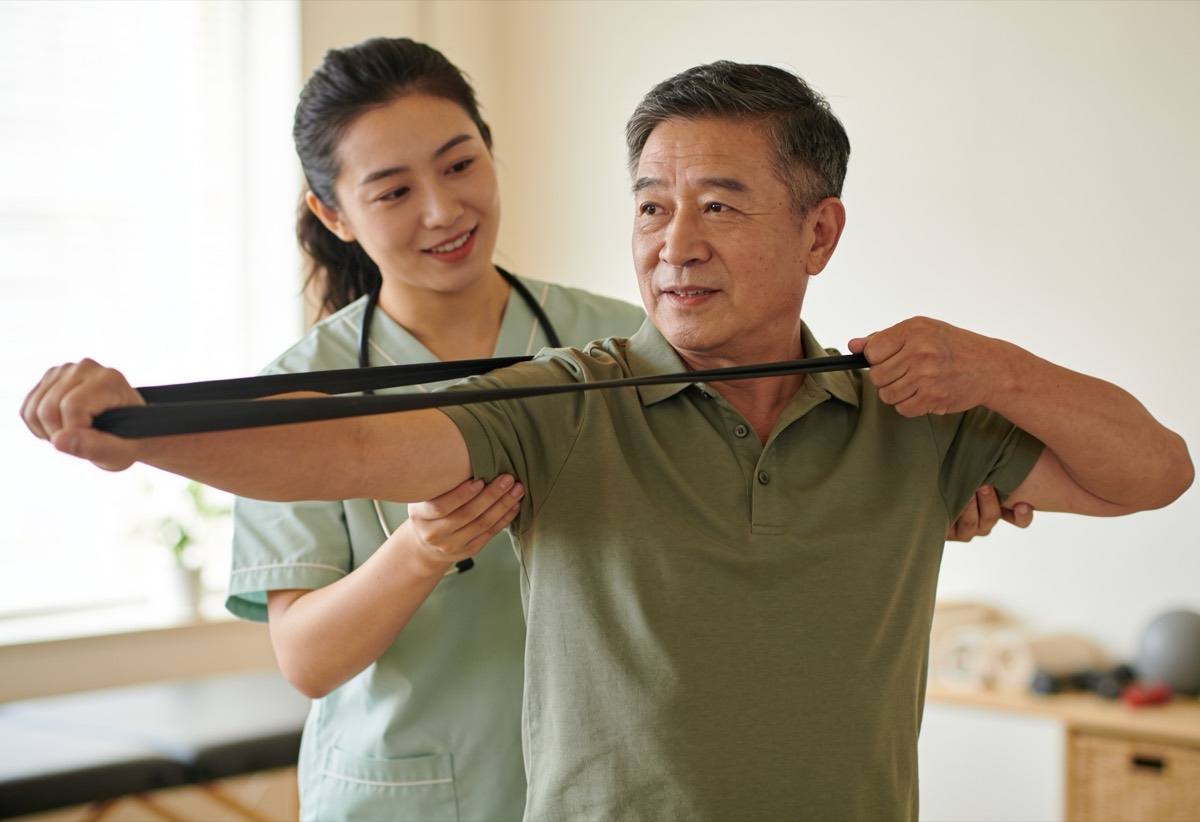
Overview
The spine is not straight when viewed from the side; it has natural curves in certain regions. The slight forward, hunched curve in the back region is called kyphosis, and the inward hollow in the low-back region is called lordosis. These curves are healthy and necessary up to a certain degree; they ensure the load is distributed evenly.
Kyphosis and lordosis physiotherapy comes into play when these natural curves increase more than necessary (increased kyphosis, that is, pronounced hunching; increased lordosis, that is, a deepened low-back hollow) or decrease and flatten. The aim is to improve posture and load distribution by restoring the spine's balanced curves.
Causes
- Postural habits — sitting bent forward for a long time and the use of screens and phones can increase hunching of the back.
- Muscle imbalance — tightness of the chest and low-back muscles together with weakness of the back and abdominal muscles makes the curves more pronounced.
- Sedentary life — weak trunk muscles cannot keep the spine in balance.
- Structural causes — some developmental conditions and those related to vertebral shape can lead to increased curvature.
- Weight and load distribution — abdominal weight in particular can increase the low-back hollow.
Symptoms
- Pronounced hunching in the back or a deepened / flattened appearance in the low back
- Forward rounding of the shoulders, forward shift of the head
- Fatigue and pain in the back and low back that increase during the day
- Difficulty standing upright for a long time
- A feeling of discomfort when breathing deeply in some cases
Treatment
The aim of treatment in kyphosis and lordosis is to re-regulate the increased or decreased curvature according to the person's muscle balance. In the vast majority of suitable cases, the curvature can be balanced and posture improved with a personalized exercise program, without the need for surgery.
Because the human body is three-dimensional, here too personalized three-dimensional exercises, not standard ones, are essential. Tight muscles are released, weak back and trunk muscles are strengthened; together with breathing exercises, the spine is worked toward its natural alignment. Manual therapy and mobilization support this process.
What We Do
First, our physician assesses the type, region, and flexibility of the curvature with a physical examination and determines a personalized treatment protocol.
Our expert physiotherapists apply mobilization, clinical massage, and, in suitable cases, cupping therapy to tight muscle groups; when necessary, they support spinal alignment with chiropractic / spinal manipulation. Once the muscles have relaxed, we aim to establish the balanced curvature and correct posture step by step with fully personalized, three-dimensional exercises.
We finish sessions with kinesiology taping and help preserve the achieved posture throughout the day. Throughout the process we reassess our client and continue follow-up with the principle 'there is no disease, there is a patient'.