
 TR
TR EN
EN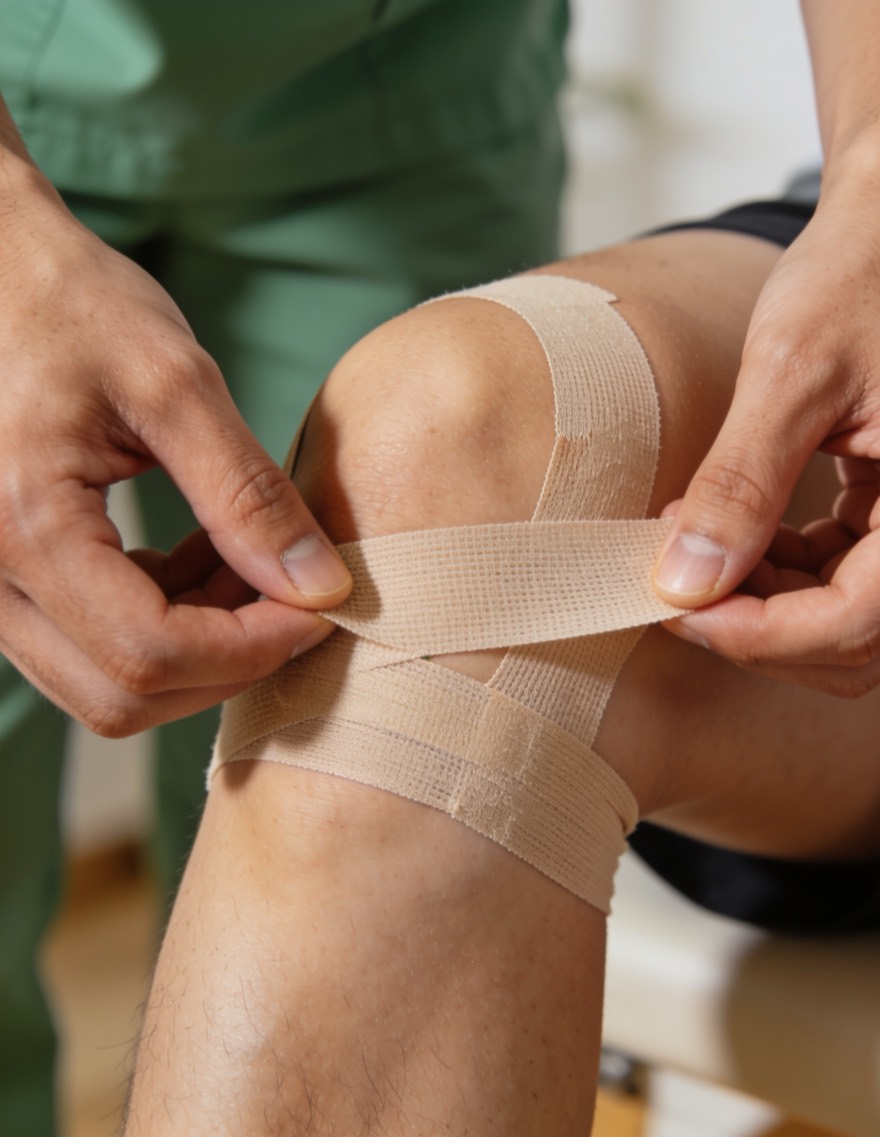
Overview
Antalgic posture is the crooked, unbalanced stance the body spontaneously adopts in order to reduce pain. Without being aware of it, the person leans their trunk to one side or forward to lessen the load on the painful area. It is most often seen in the lower back, usually accompanying conditions such as a herniated disc or nerve compression.
This posture is in fact a protective response of the body; however, when it persists for a long time it disrupts the balance of the muscles, causing one side to become excessively tense and the other to weaken. For this reason, antalgic posture is both a symptom and a condition that can, over time, itself cause new problems.
Causes
- Herniated disc — the most common cause of antalgic posture; the body leans to reduce pressure on the nerve.
- Nerve compression — sciatica and similar nerve pressures lead to a crooked posture.
- Acute muscle spasm — a sudden and severe muscle contraction pulls the trunk to one side.
- Spondylolisthesis and spinal canal stenosis — spine-related problems can disrupt posture.
- Trauma and injury — a pain-related protective posture may develop.
- Inflammatory conditions — inflammation around the spine can increase the pain and the crookedness.
Symptoms
- A noticeable leaning of the trunk to one side or forward
- Inability to stand upright and pain that increases when trying to straighten up
- Marked muscle tension and spasm on one side
- Disturbance of gait and unsteadiness
- Pain and numbness radiating to the lower back and leg
- Complaints that increase when staying in the same position for long periods
Diagnosis
Physical examination is essential in assessing antalgic posture. This is because antalgic posture is usually a symptom pointing to an underlying problem; the main aim is to find this cause. Our physician assesses the posture, muscle strength, reflexes and the location and distribution of the pain. When deemed necessary, imaging methods such as MRI, CT and X-ray are used.
Imaging findings alone are not sufficient; what really matters is to reveal, through physical examination, what is causing the crooked posture. Correctly identifying the cause is the most critical step for the success of treatment.
Treatment
The fundamental principle in treating antalgic posture is to resolve the problem causing it before trying to correct the posture itself. When the source of the pain is relieved, the body often tends to return to its natural posture. The main methods are as follows:
- Treatment of the underlying cause — resolving the herniated disc, nerve compression or spasm.
- Physical therapy — agents that reduce pain and muscle spasm.
- Manual therapy and mobilization — relaxing tense muscles and restoring balance.
- Dry needling and, when required, injections — relieving painful and spasming areas.
- Personalized exercise — re-establishing muscular balance and making correct posture permanent.
What We Do
When a client comes to us with antalgic posture, our doctor first performs a detailed examination. Our priority here is to identify the real problem causing the crooked posture; because the correct approach is to resolve the source, not to force the posture straight on its own. Our doctor makes the diagnosis and draws up the treatment protocol.
In cases where it is needed, our doctor applies dry needling to tense, spasming and painful trigger points, and gives injections when deemed necessary. Once relief is achieved, we refer our client to our specialist physiotherapists.
Our physiotherapists relax the excessively tense muscles with mobilization, cupping therapy, clinical massage and Graston; in suitable cases they support spinal alignment with chiropractic application. As the pain and spasm subside, the body's balance begins to be re-established. We then apply fully personalized, three-dimensional exercise programs to restore muscular balance for good and to establish correct posture.
We reinforce the sessions with kinesiology taping so that the support given to the tense muscles is carried throughout the day. At the end of the process we see our client off with satisfaction and continue with remote follow-up. Our principle is clear: we treat the person, not just the condition.