
 TR
TR EN
EN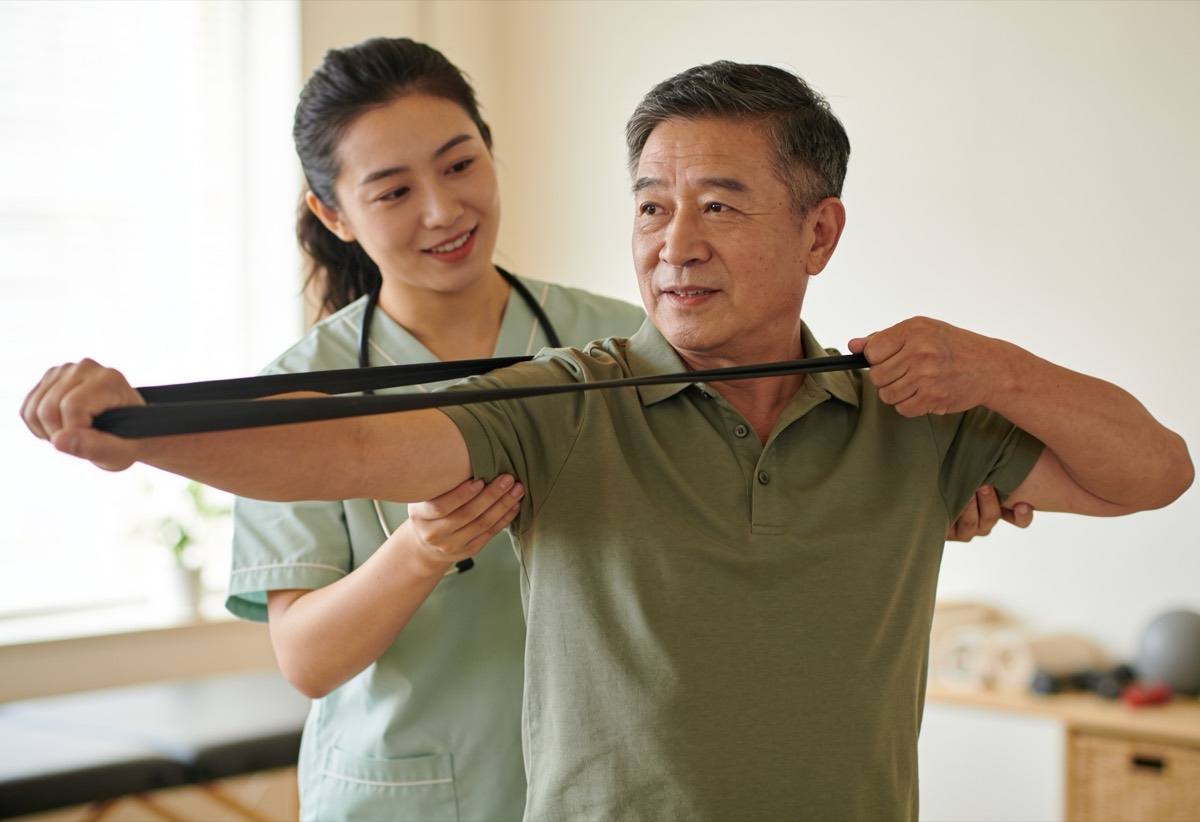
Overview
Hip osteoarthritis (coxarthrosis) is a degenerative condition that develops as the cartilage tissue covering the bone surfaces forming the hip joint gradually thins and wears down over time. As the cartilage wears away, the bone surfaces rub against each other more; this leads to pain, stiffness and restriction of movement.
Although it is a progressive process, with correct and regular treatment the pain can be brought under control, joint function can be preserved and quality of life can be significantly improved.
Causes
- Age — the natural wear of cartilage tissue with advancing age.
- Excess weight — increases the load on the hip joint and accelerates cartilage wear.
- Previous injuries — old fractures, dislocations or joint injuries set the stage for osteoarthritis.
- Genetic predisposition and joint structure — in some people the structure of the hip joint is more prone to wear.
- Excessive and repetitive loading — strenuous occupations and intense physical activity.
- Muscle weakness — weak muscles around the hip leave the joint unprotected.
Symptoms
- Pain in the groin and hip region that appears when starting to move
- Stiffness on waking in the morning or after prolonged sitting
- Shortening of walking distance and limping
- Restriction in moving the leg outward, rotating it inward and squatting
- Night pain in the advanced stage
- A sound and a sensation of friction from the joint with certain movements
Diagnosis
Physical examination is essential in diagnosing hip osteoarthritis. Our doctor assesses the range of motion, the painful movements and muscle strength. X-ray is a valuable method for showing the narrowing of the joint space and bone changes; when required, the soft tissues are also examined with MRI.
However, imaging alone is not sufficient. Some people with advanced osteoarthritis on imaging may have few complaints, while others may have marked pain despite mild findings. For this reason, imaging findings are always evaluated together with the patient's clinical picture and physical examination.
Treatment
In hip osteoarthritis the aim is to reduce pain, preserve joint mobility and slow progression. In suitable cases, conservative treatments can delay or prevent the need for surgery. We regard surgery as a last resort. The main methods are:
- Physical therapy — pain management and support of joint function.
- Manual therapy and mobilization — preserving range of motion and muscle relaxation.
- Personalized exercise — supporting the joint by strengthening the muscles around the hip.
- Lifestyle adjustments — weight control and an activity plan that does not strain the joint.
What We Do
First, our doctor performs a detailed physical examination, evaluates the imaging findings together with the patient's clinical picture, and draws up a personalized treatment protocol. We raise surgery only in advanced cases that do not benefit sufficiently from conservative methods.
In the phase where the pain is pronounced, our doctor supports the process with dry needling and injection applications when deemed appropriate; in suitable cases we strengthen the immune system with ozone therapy. Our specialist physiotherapists relax the tense muscles around the hip with mobilization, cupping therapy and clinical massage.
Once relief is achieved, we strengthen the hip and trunk muscles with fully personalized, three-dimensional exercises, balancing the load on the joint to aim for lasting relief. The human body is three-dimensional; we apply personalized rather than standard exercise.
We finish our sessions with kinesiology taping so that the support is carried throughout the day. Throughout the process we follow our client closely and see them off with full satisfaction. Our principle: we treat the person, not just the condition.